Fiber Cement
Siding vs. Vinyl: Which Is the Better Investment?
When it is time to replace your home's siding, the decision usually comes down to two main contenders: fiber cement and vinyl. Both have pros and cons, and both can look great on the right home.
Cost Comparison
Vinyl siding is the more
affordable option upfront. It is widely available, and
installation is relatively quick because the material is lightweight and easy
to work with.
Fiber cement siding, including
popular brands like James Hardie, costs more. The higher price reflects the superior materials, the
weight of the product, and the specialized installation it requires.
When you factor in longevity, maintenance costs, and
resale value, fiber cement often comes out ahead over the life of the product.
Durability and Lifespan
Vinyl siding typically lasts 20
to 30 years before it starts showing its age. Over that time, it can fade from
UV exposure, become brittle in cold snaps, and warp during Georgia's hottest
days. While modern vinyl has improved, it still has fundamental limitations as
a petroleum-based plastic product.
Fiber cement siding can last 50
years or more with minimal maintenance. It does not warp, rot, or attract
insects. It is also fire-resistant. In a climate like Atlanta's, where heat, humidity, and occasional severe
weather are the norm, that durability is a significant advantage.
Appearance and Curb Appeal
Modern vinyl siding comes in a
wide range of colors and profiles, and some premium vinyl products do a
reasonable job of mimicking wood grain. However, up close, vinyl still has a
lightweight, somewhat artificial appearance that many homeowners and buyers notice.
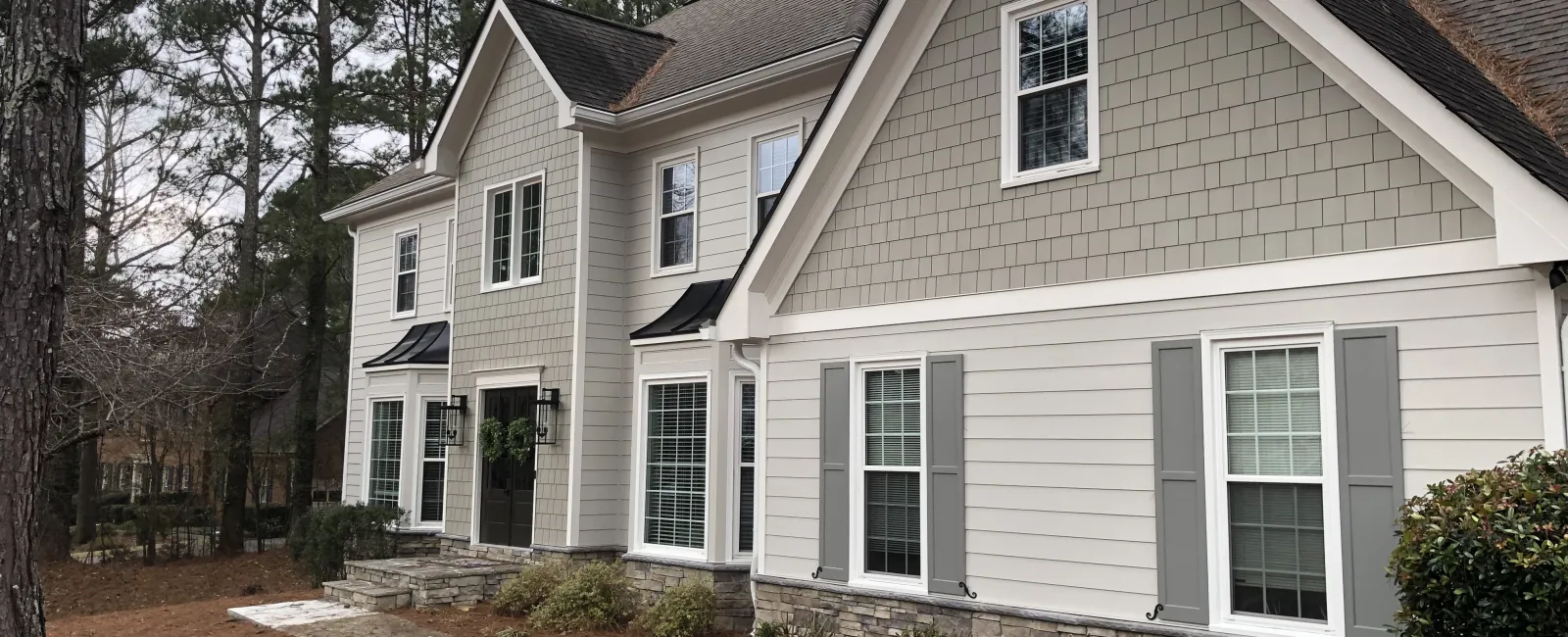
Fiber cement has a more
substantial look and feel. It can be textured to closely replicate natural
wood, and it holds paint exceptionally well. James Hardie's ColorPlus
factory-applied finishes are baked on in a controlled environment, producing a
smooth, consistent color that resists fading far longer than field-applied
paint on vinyl.
For homeowners who care about
the finer details of their exterior, fiber cement delivers a level of quality
and craftsmanship that vinyl simply cannot match.
Maintenance Requirements
Both materials are considered
low maintenance compared to natural wood. Vinyl requires occasional cleaning
with a hose or pressure washer and does not need to be painted. However, if a
panel is damaged, the color goes all the way through, so scratches are less
noticeable.
Fiber cement may need to be repainted every 15 to 20 years if you opt for field-applied paint, though factory-finished products like ColorPlus significantly extend that timeline. It is also more resistant to staining and does not collect mold and algae as readily as vinyl in humid environments.
Find the Right Siding with EXOVATIONS
At
EXOVATIONS, we help Atlanta homeowners evaluate their options, compare
materials, and choose the solution that fits their home and budget. Our
EXOvision design system lets you see your siding options on
your home before you commit. Contact EXOVATIONS for a free consultation
and let us help you find the perfect siding for your home.


