
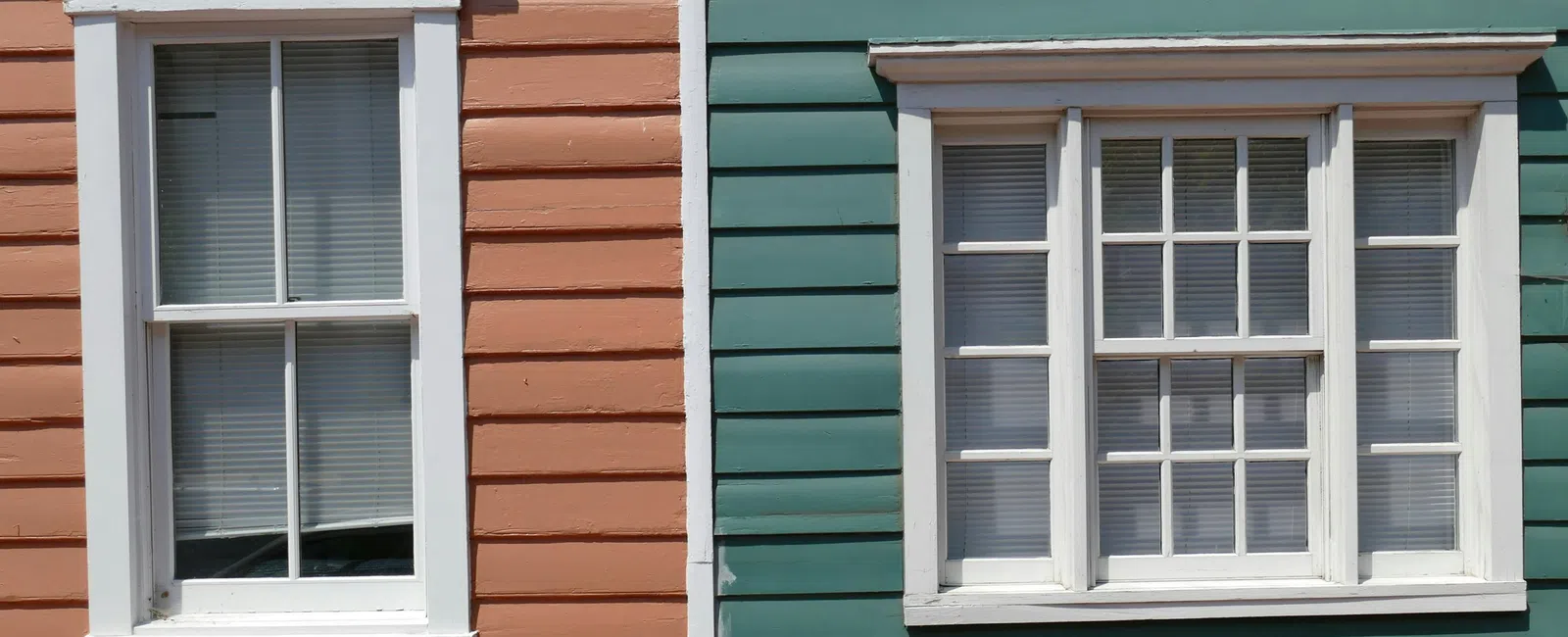
A double-hung window opens by sliding its two sashes past each other, so at most half the opening ever admits air, while a casement window cranks outward to expose the entire opening. That mechanical difference affects ventilation, cleaning, sealing, and cost, and it is why neither style is the right answer for a house; the better approach is to match each window to the room it serves.
What Is a Double-Hung Window
A double-hung window is the traditional American window, built from two sashes of glass that operate up and down within a single frame. Both the top and bottom sashes move, so air can enter low, exit high, or both at once.
Most modern double-hung windows are designed so the sashes tilt inward, which means the outside glass can be cleaned from inside the house rather than from a ladder. Depending on the model, a double-hung window comes with a half screen or a full screen.
The appeal is familiarity and flexibility. Double-hung windows suit almost every architectural style found on Atlanta homes, from traditional brick to craftsman, and they fit openings that are taller than they are wide. Because the sashes slide vertically, they also work well next to walkways, patios, and porches where an outward-opening sash would be in the way.
What Is a Casement Window
A casement window is hinged on one side and swings outward when you turn a crank handle. Instead of sliding, the whole sash pivots open like a door, which exposes the full opening to the breeze. That is why casement windows deliver the most ventilation of any operable style. On a casement window, the screen sits on the interior side of the house, since the glass opens away from you.
Casement windows have two practical advantages beyond airflow:
1) The sash presses against the frame when closed, and that compression creates a tighter seal than a sliding window can, which helps with energy efficiency during Atlanta summers and winter cold snaps.
2) With no meeting rail across the middle, a casement gives a cleaner, uninterrupted view.
Ventilation and Airflow
Ventilation is the clearest split between the two. A double-hung window can only ever open half its total area, because one sash always overlaps the other.
A casement opens the entire area and can even catch a side breeze and steer it indoors when angled, which makes casement windows a strong choice for rooms that need maximum air movement, like a kitchen or a room with few windows.
Cleaning and Maintenance
Both styles are built for easy cleaning, but they get there differently. A double-hung window tilts both sashes inward so you can reach the exterior glass from inside, which is convenient on a second story. A casement window swings fully open, so the outside face rotates within arm's reach of the interior.
The casement's crank mechanism is one more part to maintain over the years, while a double-hung relies on a simpler balance system.
Energy Efficiency and Sealing
For sealing, the casement has the edge. When you crank a casement window shut, the sash seats tightly against the weatherstripping on all four sides, so there is very little gap for air to leak through. A double-hung window relies on sashes that slide, which means the seal is slightly looser by design.
Both styles can be ordered with energy-efficient glass and quality weatherstripping, and both perform well, but if airtightness is the priority, a casement window seals better.
Cost and View
Casement windows generally cost more than a comparable double-hung window because of the crank hardware and the outward-opening sash. In exchange, you get that unobstructed view, since a casement has no middle rail crossing the glass.
A double-hung window has a meeting rail where the two sashes overlap, which slightly divides the view but keeps the price lower. For a home with a lot of windows, that per-unit difference adds up, so many homeowners mix the two, using casements where the view and airflow matter most and double-hung windows elsewhere.
Choosing the Right Window for Each Room
Neither style necessarily wins, imnstead the better question is which window fits which opening. A double-hung window fits traditional architecture, costs less, works in tight exterior spaces near walkways and patios, and handles bedrooms and living areas well. A casement window ventilates fully, seals tightly, and frames a clean view, which makes it worth the higher price over a kitchen sink, in a room with few windows, or anywhere airflow and an unobstructed view matter most.
Most Atlanta homes end up with a combination rather than one style throughout. The practical approach is to go room by room, weighing how each opening is used and whether airflow, view, cleaning access, or budget carries the most weight for that spot.
EXOVATIONS installs both styles, along with sliding, awning, garden, bay, bow, and picture windows, in energy-efficient designs suited to Georgia's climate. To compare options for your home, explore our replacement window styles or book a free consultation through our window replacement service. We will help you match the right window to each opening, then show you the result on your own home with EXOvision before you commit.


