
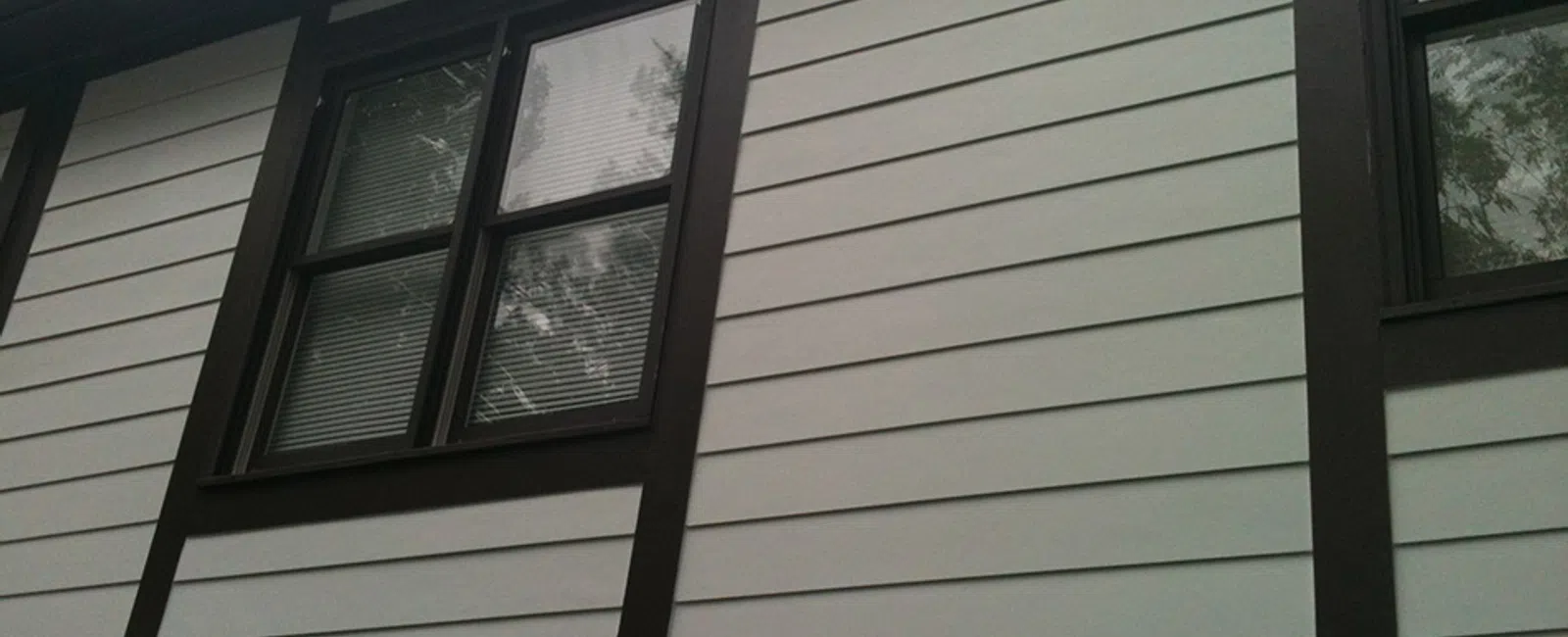
If your home's exterior is starting to peel paint, has soft spots near the ground, has woodpecker holes, or has swollen boards, you have probably started looking into what to replace it with. Almost every search leads to fiber cement siding.
It shows up everywhere for a reason. In a climate like Atlanta's, where the air stays heavy for months and storm season is year-round, the siding you choose has to do more than look good on installation day. It has to survive a decade of pollen, thunderstorms, and heat without rotting, warping, or begging to be repainted every few years.
Here is an honest look at the pros and cons of fiber cement siding, what it is actually made of, how long it lasts, and whether it makes sense for your home. EXOVATIONS has been replacing exteriors across metro Atlanta for 28 years, and fiber cement is the only siding we install.
What Is Fiber Cement Siding?
Fiber cement siding is an engineered exterior cladding built to mimic the look of wood, stucco, or stone while eliminating the problems those natural materials face. It comes in lap boards, vertical panels, shingles, and board and batten profiles, so it can match almost any architectural style, from a Craftsman bungalow in Grant Park to a new build in Alpharetta.
What Is Fiber Cement Siding Made Of?
Fiber cement is made of four core ingredients:
- Portland cement, which gives the boards their rigidity and structure
- Sand, for stability and density
- Cellulose fibers (wood pulp), which add flexibility so the boards do not crack
- Water, which binds everything together during the curing process
That blend is pressed, cured, and finished into boards that are dense, dimensionally stable, and far less reactive to moisture and temperature swings than solid wood. EXOVATIONS installs James Hardie fiber cement siding exclusively, the most widely recognized brand in the category, and we hold James Hardie Elite Preferred status, which is their highest contractor tier.
The Pros of Fiber Cement Siding
Here is where fiber cement earns its reputation, and why it has become the default choice for higher-end exterior renovations across the metro.
It is durable. Fiber cement resists warping, cracking, and fading in conditions that punish other materials. Vinyl can warp in extreme heat, and wood can rot, split, and rot again. Fiber cement holds its shape and finish season after season.
It will not burn. Fiber cement is non-combustible and carries a Class A fire rating, the highest available. It adds a real layer of protection to your home, and some insurers view a non-combustible exterior favorably.
Pests leave it alone. Termites, carpenter ants, and woodpeckers go after wood siding constantly in the Southeast. They cannot chew through or nest in fiber cement, which removes one of the most common and expensive maintenance headaches Atlanta homeowners deal with.
It is HOA and architectural-review friendly. If you live in a community with an architectural review board, and many of the metro's nicer neighborhoods do, fiber cement's clean lines and authentic wood-grain look are widely approved. It delivers the upscale appearance boards want without the upkeep liability they worry about.
It holds paint exceptionally well. Where wood needs scraping and repainting every few years, fiber cement holds its finish far longer. James Hardie offers factory-applied color finishes baked onto the board, which extends the time between repaints significantly.
It looks like a premium home. Fiber cement reads as a quality, permanent material. Exterior siding replacement is consistently one of the strongest remodeling projects for return on investment, and a well-installed fiber cement exterior makes a home more attractive to buyers.
The Cons of Fiber Cement Siding
Higher upfront cost. Fiber cement costs more than basic vinyl up front. Most homeowners find the math works out over time thanks to its lifespan and low maintenance, but the initial number is higher, and you should plan for that.
It demands expert installation. Fiber cement is heavy, requires specialized cutting tools, and has to be fastened and flashed correctly to perform as designed. This is not a DIY project, and a poor install can undermine even the best product. This is exactly why the manufacturer certifies contractors, and why working with an Elite Preferred installer matters.
Lower insulation value on its own. Fiber cement is not a strong insulator by itself. Its R-value is modest, so if energy efficiency is a priority, it is usually paired with a quality house wrap or added insulation during the project rather than relied on alone.
How Long Does Fiber Cement Siding Last?
With proper installation and minimal upkeep, fiber cement siding has a lifespan of 30 to 50 years. That easily outpaces wood and most vinyl, which is why many homeowners treat it as a buy-once decision they will never have to revisit. James Hardie backs its fiber cement boards with a 30-year limited, transferable warranty.
How Much Does Fiber Cement Siding Cost in Atlanta?
Cost depends on the size of your home, the number of stories, the condition of what is underneath, and the profiles and finishes you choose. As a general guide, installed fiber cement typically runs higher than vinyl and competes with the cost of natural wood, but with a fraction of the long-term maintenance.
Because every home and every wall behind the siding is different, the only number worth trusting is one tied to your actual house. A free in-home estimate is the most reliable way to see what your project would cost.
Is Fiber Cement Siding Worth It?
For most Atlanta homeowners, especially those investing in a home they intend to keep, fiber cement is worth it. You are trading a higher upfront cost for decades of durability, fire and pest resistance, a premium appearance, and far less maintenance than wood. In a humid, storm-exposed climate, that tradeoff lands in your favor more often than not.
The material is only as good as the hands that install it. The boards do the work, but correct fastening, flashing, and the right climate-zone product are what protect your home.
Considering New Siding for Your Atlanta Home?
EXOVATIONS has spent 28 years replacing exteriors across metro Atlanta, and we install James Hardie fiber cement siding exclusively. As a James Hardie Elite Preferred Remodeler and a licensed Georgia general contractor, we know exactly how this material should be installed to perform in our climate.
If your siding is showing its age, or you are weighing fiber cement against your other options, schedule a free in-home estimate. We will walk through your home, answer your questions, and help you decide what actually makes sense for your house and your budget.


