
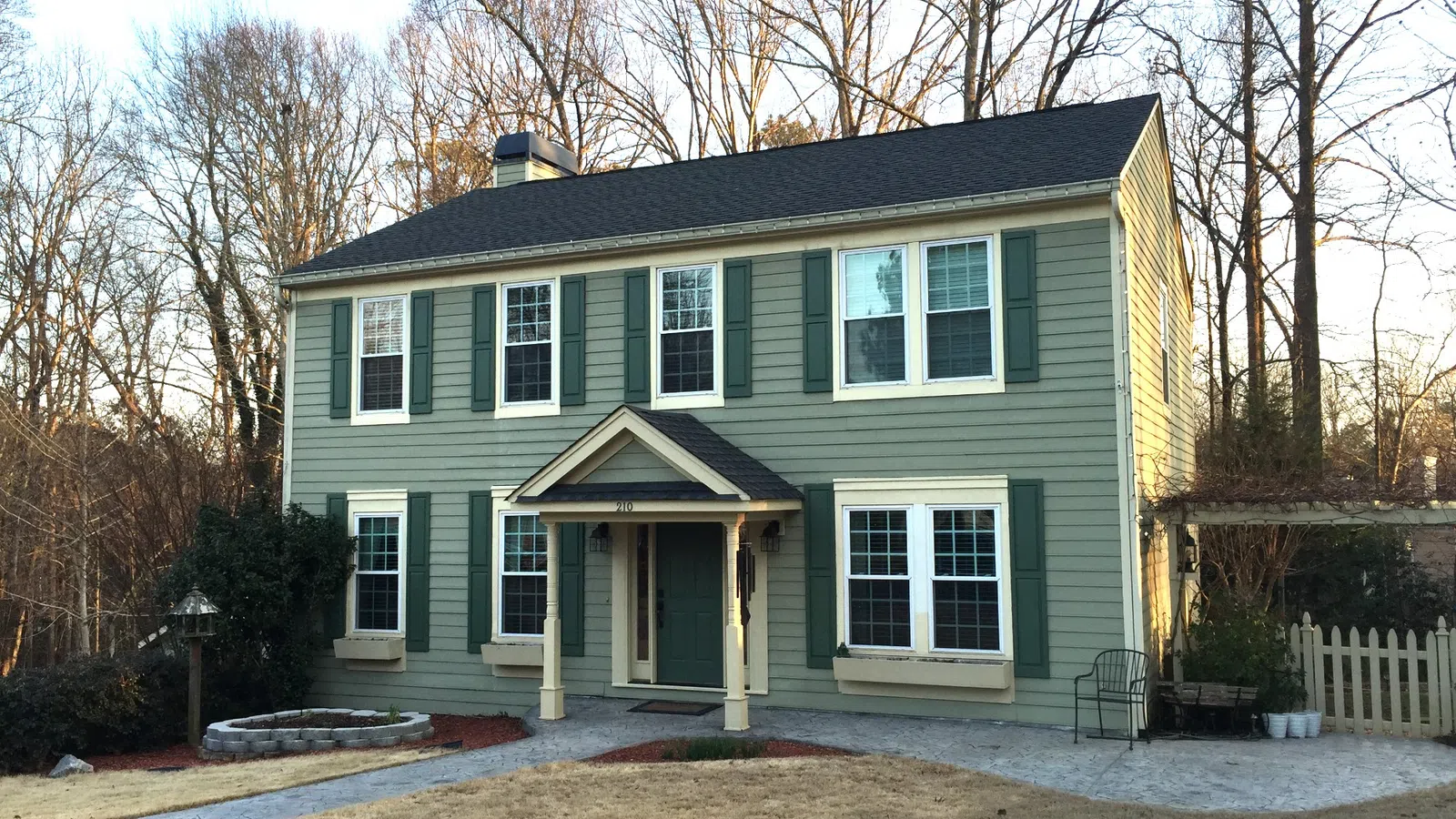
a house with a deck

Hardboard Siding & Pressboard Siding

How to determine if your home has problematic hardboard or pressboard siding.
a wooden staircase leading up to a building

Pressboard Siding

Pressboard siding, also called synthetic wood siding or hardboard siding, is primarily composed of wood fibers, flakes, or chips held together by adhesives and resins. This type of siding was extremely popular from the 1980's to the mid-1990's as a low-cost alternative to other house siding.

In 1994, pressboard siding gained national attention when a class action lawsuit settlement against some of its largest manufacturers dictated that anyone who owned property constructed with their hardboard siding between January 1, 1980, and January 15, 1998 (dates vary by manufacturer) could be reimbursed for damages caused by the siding (if any). Following the class action suit, almost all manufacturers ceased production of their hardboard siding products.

Potential Issues With Pressboard Siding

Pressboard siding naturally absorbs water and swells slightly. With proper installation and ongoing maintenance, that absorption rate can be kept to a safe level. The real trouble starts when the siding is installed improperly, which, unfortunately, is common with this product.

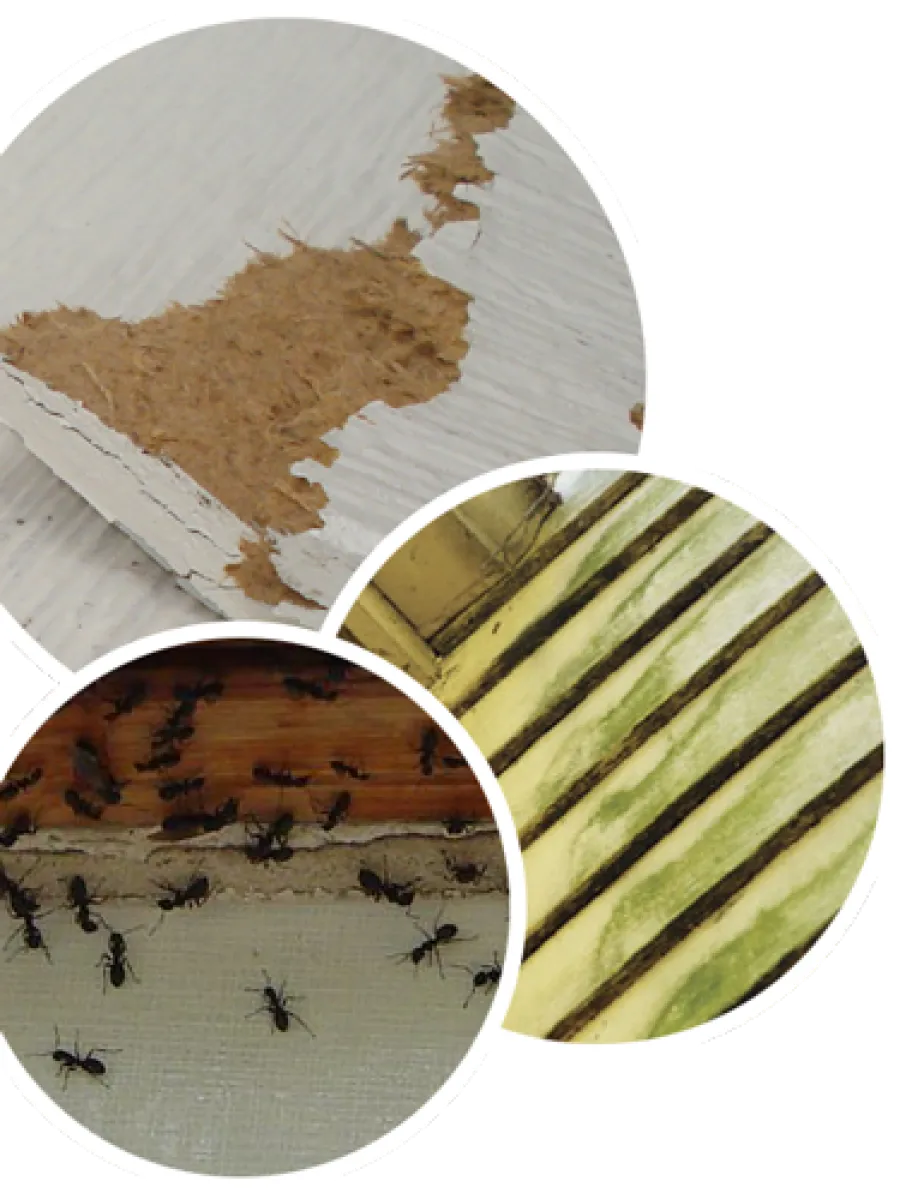
Improperly installed hardboard siding can deteriorate in several ways, including:

Close-up of beige vinyl siding with peeling paint and visible wear on several panels.

Buckling and warping

Close-up of wood siding with severe termite damage near a brick wall corner on a house exterior.

Rotting and softening

White exterior house siding with multiple areas of bubbling and peeling paint near a window and garden bed.

Blistering and severe swelling

Light blue house siding covered with patches of green moss and mildew buildup on the surface.

Mildew and mold growth

Close-up of a large swarm of black ants clustered along a white baseboard and floor corner indoors.

Insect infestation

How To Tell If Your Home Has Pressboard Siding

Identifying the type of siding on your home takes a little detective work, but you can usually figure it out in just a few minutes. Follow these steps:

1

Find an unfinished area of your home.

Head to an attic, garage, or any other space where the back of your siding is exposed and visible.

2

Pull back the tar paper.

Gently pull back the tar paper covering the back of the siding to see the material beneath.

3

Look for manufacturer markings.

Inspect the back of the siding for a manufacturer's name or an AHA code (American Hardboard Association). These markings will tell you exactly what product was installed.

4

Search the AHA code online.

If you find an AHA code, search for it online. The code will tell you the manufacturer, the type of siding, and where it was made.

5

Compare against known pressboard brands.

If you can't find a clear code or name, the two largest-selling brands of pressboard siding are IP's Masonite Omniwood and LP's Inner-Seal. Search online for images of these products to compare against the siding on your home.

Get Rid of Problematic Siding

With Help From a Certified Contractor

What To Do If Your Home Has Pressboard Siding

Just because your home has pressboard siding doesn't necessarily mean you have a problem. The first step is to assess the condition of your siding and determine the level of damage, if any. From there, you can decide whether maintenance or full replacement is the right path forward.

8 Things That Every Homeowner With Hardboard Siding Should Do

Homeowners with hardboard siding MUST perform the following care and maintenance to prevent and slow future damage to their homes.

1. Watch for any major flaws

Look out for cracked paint, missing sealant, holes, loose nails, and other issues in your hardboard siding that could lead to moisture infiltration. Even slight discoloration can indicate water absorption.

2. Slope the ground away from hardboard siding

Ensure that the ground slopes away from the foundation. If it does not, you will have problems with rot, mold, and mildew.

3. Keep nature away from hardboard siding

Hardboard siding must be installed at least 6 inches from the ground, grass, mulch, and plants. Do not allow vines or creepers to twine around your hardboard siding.

4. Direct water drainage away from hardboard siding

Any drainage pipes and gutters must be routed away from the foundation. Also ensure that all these pathways are free of clogging and obstructions.

5. Maintain your gutter

Keep downspouts and gutters free of blockages to the flow of water.

6. Point sprinklers away from hardboard siding

If you have sprinklers in your lawn, you must direct them away from the siding. Prolonged exposure to the water can cause the siding to swell, warp, crack, lose color, and grow mold and fungus.

7. Never use power washers on hardboard siding

Never use power washers to wash your hardboard siding. The pressureof the water can be too high and can cause splits or cracks on the siding.

8. Do not delay in making repairs

If you notice any loose nails, missing caulk or sealant, or cracked paint, have it repaired as soon as possible. Such defects on the hardboard sidingcan provide an inlet for moisture, which can cause rot and deterioration.