
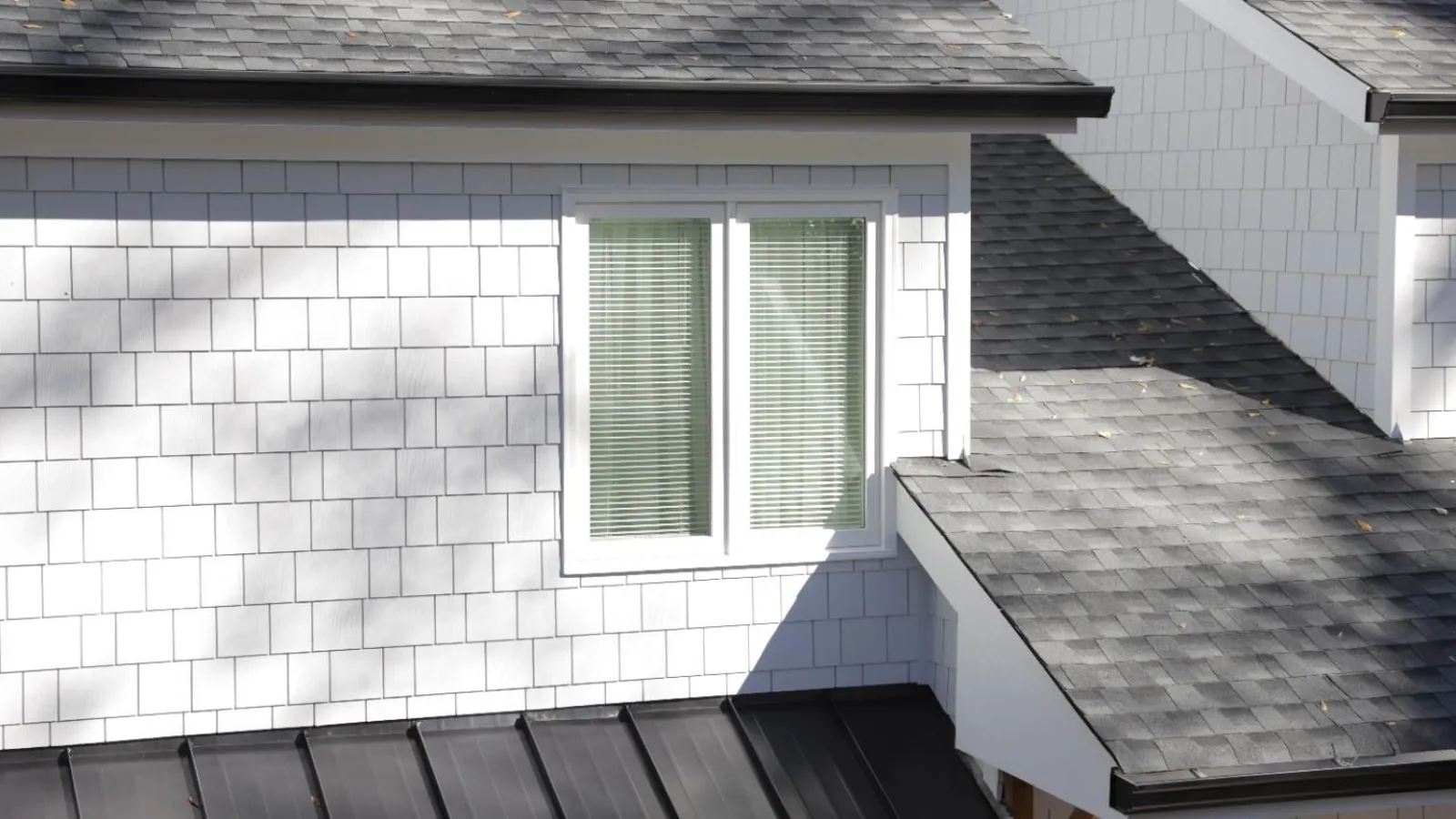
Siding Replacement and Repair in Lilburn, GA
Expertise for Lilburn's Older Gwinnett Housing Mix
EXOVATIONS is a licensed siding contractor serving Lilburn and east Gwinnett, with 28+ years on the older established housing stock that defines this market. We know what's behind the cedar shake, hardboard, and brick-and-siding combinations on most Lilburn homes, and we write up the right scope on every project.

Request A Quote Today!
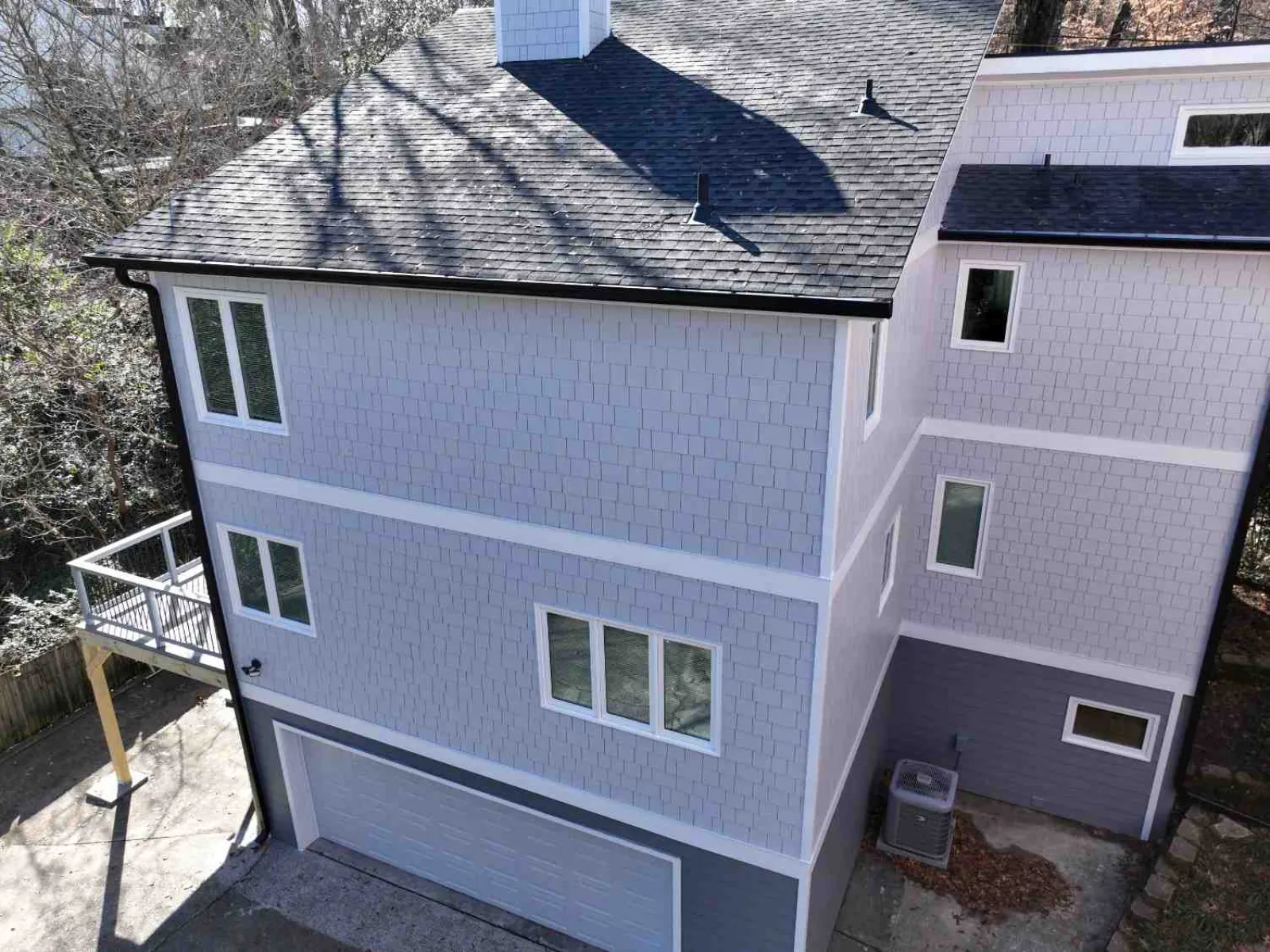
Professional Siding Contractors in Lilburn, GA
Lilburn is one of the older established cities in Gwinnett County, incorporated in 1910 with a downtown core that still anchors the city's identity today around Old Town Lilburn. Most of the city's housing stock was built in a longer and earlier window than newer Gwinnett markets: a 1960s through early-1980s east-Gwinnett suburban wave, with smaller pockets of pre-1950 homes near Old Town and a separate wave of 1990s-2000s subdivision infill on the outskirts. The cladding mix is distinctive: cedar shake is more common here than on newer Gwinnett builds, and a significant share of homes have brick fronts with cedar shake, T1-11, or hardboard on the sides and back.
We've been working in Gwinnett County since 1998, which means we've handled hundreds of projects on east-Gwinnett homes from this exact build era. We know which Lilburn neighborhoods went heavy on cedar shake, which ones moved to hardboard in the late 1970s, and how the brick-and-siding combinations work for a partial re-side versus a full perimeter project. Every Lilburn project starts with an in-home assessment and a written quote matched to your home's era and cladding mix.
EXOVATIONS installs James Hardie fiber cement on full re-sides. As an Elite Preferred Remodeler, a credential held by a limited number of contractors in the Atlanta market, we are certified to install the full HardiePlank® product line with manufacturer-backed warranty terms.
What that means for your home:
- 15-year color warranty on the factory ColorPlus® finish, no five-to-seven-year repaint cycle
- 30-year limited product warranty, transferable to the next owner
- Non-combustible, Class A fire-rated relevant for homeowner's insurance on some properties
- Will not warp, rot, or feed pests in Georgia humidity
- Third-party GuildQuality satisfaction survey on every James Hardie project we install
See Our Work
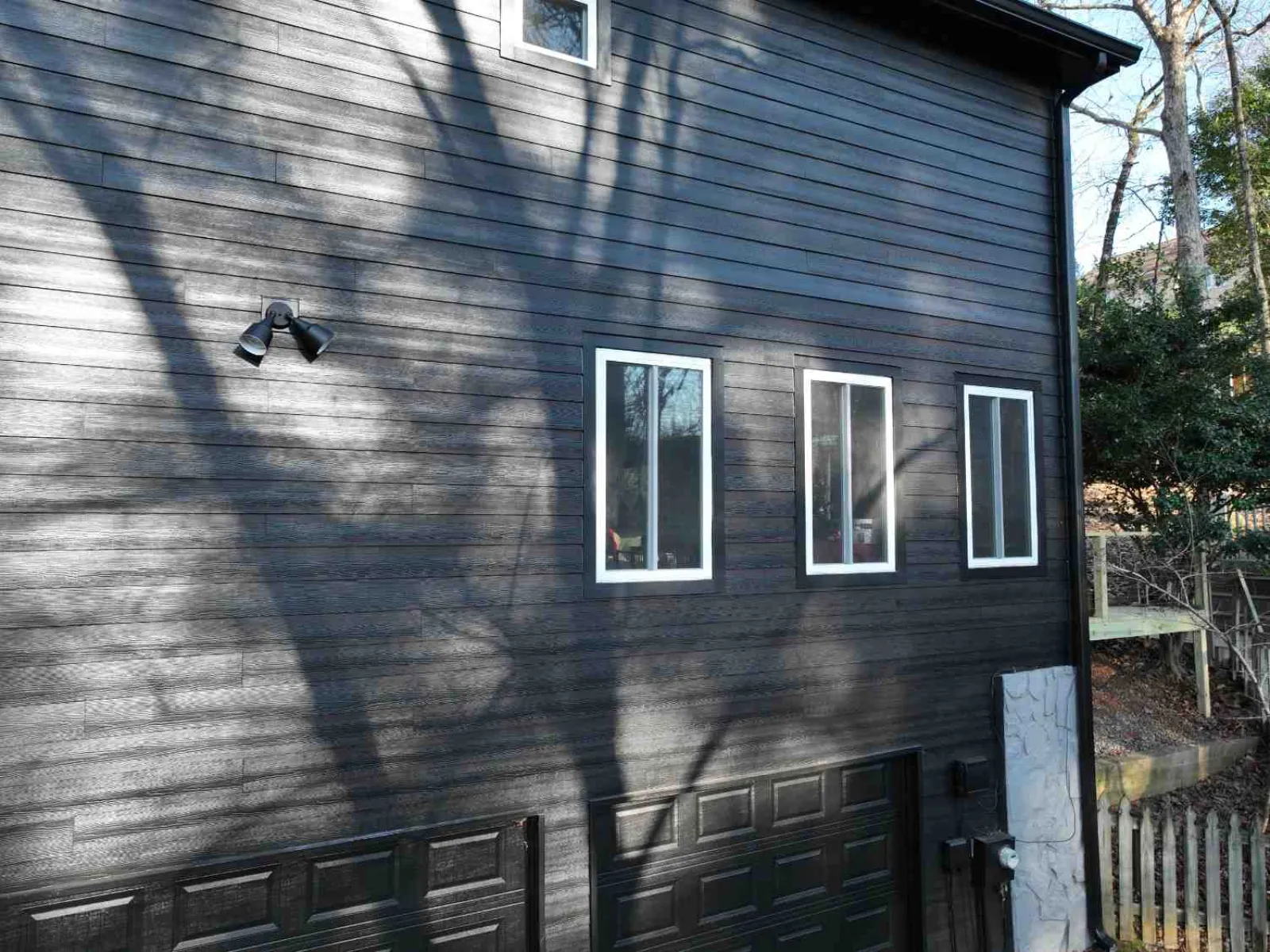
Take a tour through our photo gallery to appreciate the exceptional craftsmanship EXOVATIONS delivers to every siding project in Lilburn, GA. Showcasing complete siding replacements and skilled repairs, our gallery presents an array of styles and finishes, reflecting our meticulous attention to detail and high-quality workmanship. If you need inspiration or want to see the transformations up close, our gallery offers a sneak peek into how we can enhance and protect your Lilburn home with long-lasting siding solutions.
Why Lilburn Homeowners Pick EXOVATIONS
Three things show up on every EXOVATIONS siding project in Lilburn: a written quote after an in-home assessment, a verifiable credential (James Hardie Elite Preferred Remodeler plus a Georgia general contractor's license), and a warranty explained in writing before the first board comes off. We follow every installation with a third-party GuildQuality satisfaction survey so the feedback goes on record.
Lilburn's housing stock is older and more diverse than most surrounding cities. A 1968 cedar-shake ranch in Mountain Park, a 1979 brick-and-hardboard split in Five Forks, a pre-1950 home near Old Town, and a 1995 Parkview-cluster subdivision build are all "Lilburn" projects, and each one needs a different scope conversation. We've been working in east Gwinnett since 1998 and know how to read each era. We don't quote the same scope on every home.
Signs Your Lilburn Home Needs New Siding
Knowing when to repair or replace your siding helps you avoid expensive surprises and keeps your Lilburn home looking right. Six signs to watch for, with the east-Gwinnett 1960s-1980s housing context that makes them show up the way they do here.
Cracks, Warping, or Holes
On a Lilburn home with original 1960s or 1970s cedar shake, the cladding has been at the end-of-service-life for years, and visible cracks usually mean the panel is splitting from the inside out. On a late-1970s or early-1980s hardboard home, hairline cracks become panel failure quickly because the product is also past intended service life.
Fading or Peeling Paint
South and west exposure on a Lilburn home with painted cedar shake or hardboard degrades paint faster than on factory-finished fiber cement. Chalky residue on your fingers when you touch the siding means the paint binder has broken down. On a 50 or 60-year-old home, this is almost always a system-wide signal.
Mold, Mildew, or Algae Growth
North and east elevations of most established Lilburn neighborhoods sit under heavy mature canopy, especially in Mountain Park, Camp Creek, and the older Five Forks subdivisions where the original 1960s-1970s landscaping is now fully grown in. That shade plus humidity is the textbook condition for algae and mildew growth.
Bubbling or Blistering
Almost always trapped moisture. On a Lilburn home built before 1985, the original flashing details at window heads, deck ledgers, and roof-to-wall transitions were often under-spec'd by modern standards. Bubbling siding is usually downstream of one of those original details finally giving up.
Increased Energy Bills
If your Lilburn home was built before 1990 and has never been re-sided, there is almost certainly no exterior continuous insulation behind the existing cladding. A re-side paired with continuous insulation often delivers a measurable cooling-cost reduction in our climate.
Loose or Missing Panels
On older Lilburn homes, this is often the result of fastener pull-through after the underlying sheathing has softened, not just storm damage. A single missing panel exposes sheathing to wind-driven rain and accelerates the underlying failure that caused the panel to come loose in the first place.
Neighborhoods We Serve in Lilburn
Frequently Asked Questions
Q Is EXOVATIONS a licensed siding contractor in Lilburn?
Yes. EXOVATIONS is a licensed Georgia general contractor, fully insured, and a James Hardie Elite Preferred Remodeler, a credential publicly searchable in the manufacturer's contractor directory. We've been serving Lilburn and east Gwinnett since 1998.
Q What warranty comes with an EXOVATIONS siding installation in Lilburn?
James Hardie carries a 30-year limited product warranty and a 15-year warranty on the factory ColorPlus® finish, both transferable to the next owner. We also stand behind our installation work with a limited lifetime workmanship warranty, all explained in writing before the first board comes off your home.
Q Our Lilburn home is from the 1970s and has brick on the front with original cedar shake on the sides. What are our options?
Most 1970s brick-front Lilburn homes with original cedar shake are at or past end of service life on the shake, and the typical scope is a partial re-side on the sided elevations (cedar shake replaced with fiber cement, brick front untouched). The new cladding is color-matched and profile-matched to the brick and existing trim so the home reads as architecturally intentional. If the brick itself is failing or you want to redesign the front, we cover that scope too, but the partial re-side is usually the right answer.
Q Our Lilburn home is in the Parkview High School cluster. Does that affect how we should think about siding investment?
The school cluster doesn't change the technical scope, but it does change the resale-value math. Parkview-cluster homes draw a more discerning resale buyer who looks closely at exterior condition, so a properly-scoped re-side with fiber cement tends to recover more of its cost at resale here than in less-resale-sensitive markets. We can write up the project with that resale calculus in mind if you want to factor it into the scope decision.