
If your roof is leaking or aging far faster than it should, the shingles themselves may be the problem. Over the past two decades, two asphalt shingle lines became notorious across metro Atlanta for failing early: Atlas Roofing's Chalet line and Owens Corning's Supreme three-tab shingle. Both were quality brands with one troubled product, both were popular on Georgia homes, and both have since been discontinued. If you own a home built or re-roofed since 2000, it is worth knowing how to recognize defective shingles and what steps to take if you find them.
What Defective Shingles Look Like
Failing shingles tend to show a consistent set of symptoms. Any one of these can appear with normal aging, but several together, especially on a relatively young roof, point toward a manufacturing problem.
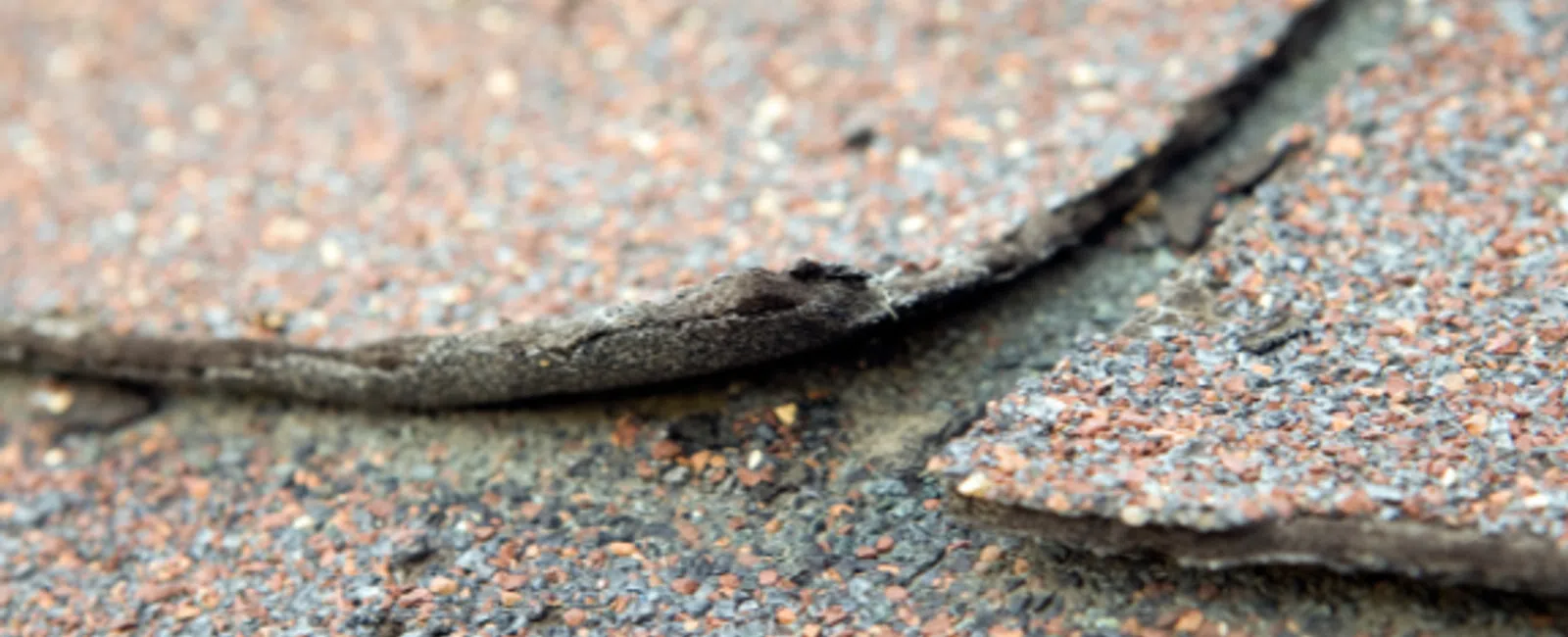
- Blistering shingles. Small raised bubbles form on the shingle surface when moisture or gas becomes trapped during manufacturing. As the blisters open, they expose the asphalt and accelerate wear. Widespread blistering on a young roof is a classic sign of defect rather than weather.
- Cracking shingles. Splits and cracks appear across the surface as the shingle loses flexibility prematurely. Cracking lets water reach the mat and the deck beneath.
- Shingle granule loss. The protective granules wash into gutters and downspouts, leaving bald, shiny asphalt behind. Heavy granule loss on a roof that is only a few years old is one of the strongest indicators of a defective product.
- Premature leaks and roof failure. When blistering, cracking, and granule loss combine, water penetrates the shingle, and the roof begins to leak years or even decades ahead of its rated lifespan.
Some affected roofs showed extensive damage within a year or two of installation, well inside the warranty period. That timeline is what separates a defect from ordinary wear.
The Two Shingle Lines Georgia Homeowners Should Know
Most defective-shingle concerns in the Atlanta area trace back to one of these two products. Knowing which one you may have helps you identify the problem and pursue the right claim.
Atlas Chalet Shingles
Atlas Chalet was an inexpensive three-tab shingle designed to mimic the look of pricier dimensional architectural shingles. That combination of low cost and high-end appearance made it a favorite of homebuilders, and it was installed on tens of thousands of Georgia homes, especially from about 2000 until Atlas discontinued the line in mid-2010. Homeowners and roofers reported widespread blistering, cracking, and granule loss, sometimes on shingles less than a year old.
To identify Atlas Chalet shingles, look for that dimensional, architectural-style appearance on what is actually a flat three-tab shingle, combined with early blistering. Because the line was discontinued, a definitive match usually requires a licensed inspector. A class action was consolidated in federal court in Atlanta, but the court declined to certify the class in May 2017, so affected homeowners now pursue claims individually. Atlas has denied that the shingles are defective.
Owens Corning Supreme Shingles
The Owens Corning Supreme three-tab shingle is a basic, value-priced product that was widely installed for decades. Homeowners have reported premature pitting and granule loss leading to leaks, in some cases on roofs less than five years old. Owens Corning has maintained that the product performs as warranted and has not issued a recall.
A significant update for Georgia homeowners is that Owens Corning discontinued the Supreme three-tab line in Georgia market areas in January 2025, as part of an industry-wide shift away from three-tab shingles toward more durable architectural products. As with Atlas Chalet, a discontinued shingle is difficult or impossible to match, which becomes important during an insurance claim.
How to Tell Defective Shingles From Storm Damage
The pattern of damage usually reveals the cause. Wind and hail damage tends to be isolated to one slope or one side of the roof, following the direction of the storm. Manufacturing defects tend to appear uniformly across every slope regardless of exposure. If the blistering, cracking, and granule loss look the same on the north, south, east, and west faces of your roof, and the roof is younger than its warranty, defect is the more likely explanation. A professional inspection is the reliable way to tell the difference without causing further damage.
Three Things to Do if Your Shingles Appear Defective
Have Your Roof Inspected
Unless you saved leftover shingles from the original installation, identifying the exact product is difficult from the ground. Hire a state-licensed home inspector or roofing contractor, or ask your insurer to send an adjuster. A qualified professional can identify the shingle and assess the damage without walking on your roof carelessly or causing new problems. They can also document whether the damage looks weather-related or consistent with widespread shingle failure.
Contact the Manufacturer
If you are the home's original owner, or you installed the current roof yourself, you may be able to file a warranty claim with the manufacturer. Gather your records first, including who installed the roof and whether they were manufacturer-certified, since the manufacturer will ask. Read the warranty closely so you understand its limits. Most shingle warranties cover only the cost of replacement shingles, which means you may be responsible for underlayment, other materials, and labor.
Contact Your Insurance Company
If the manufacturer route stalls, or you are not the original roof owner, a homeowner's insurance claim may be the better path. If an adjuster finds significant, widespread damage, your policy may cover a full replacement. If the damage is isolated, the insurer may only approve a repair with matching material. This is where a discontinued shingle works in your favor: when a roof of Atlas Chalet or Owens Corning Supreme shingles cannot be matched, that often strengthens the case for a full tear-off and replacement rather than a patch. Coverage language varies, so review your specific policy and speak with your adjuster.
Be wary of any roofing company that shows up uninvited, offering to inspect your roof or to handle your insurance claim for you. Do not sign anything that lets a contractor act as your representative with your insurer. Deal with your adjuster directly, and make sure any insurance checks are written to you, not to a roofing company.
Why a Discontinued Shingle Often Means a Full Replacement
Both Atlas Chalet and the Owens Corning Supreme three-tab line are now out of production. When a single shingle fails on a discontinued roof, there is no original-equipment match available, and mixing in a different shingle leaves a visible, uneven patch that may not seal properly. For many homeowners, that turns a small area of damage into a justification for replacing the entire roof. Documenting the discontinuation and the failed match is a key part of making that case to an insurer.
Talk to EXOVATIONS About Your Roof
Defective shingles are stressful, and the claims process can be confusing. EXOVATIONS has been a state-licensed, GAF Master Elite roofing contractor serving metro Atlanta for decades. We install GAF roofing systems, which we consider the best-quality shingles available, and we can inspect your roof, identify the shingles, and document what we find so you have the evidence you need for a manufacturer or insurance claim.
Request a free quote or book an appointment online to schedule a professional roof inspection. You can also learn more about our roofing services and workmanship warranties.


